Wednesday, February 27, 2013

8 Ways to Burn More Fat, Faster

News flash: You don't have to overhaul your life to work off mega calories. Here are our eight simple rules for squeezing the most out of your everyday routine to score the silhouette you've been sweating for. 

Related: Get a Firmer Butt in 30 Minutes 

Rule #1: Be an early bird to get the workout. 
Lace up first thing and you'll increase your odds of exercising today threefold. A study of 500 people at the Mollen Clinic, a preventive medicine and wellness center in Scottsdale, Arizona, found that 75 percent of those who worked out in the morning did so regularly, compared with just half the afternoon exercisers and a quarter of the post-work crowd. "At the beginning of the day, you have the fewest excuses for skipping exercise," says clinic founder Arthur Mollen, DO. Not waking up early enough, of course, is the main one. "Limit using the snooze button to only five minutes so that you don't fall into a deep sleep again," Dr. Mollen advises. Bonus! You'll go to work feeling focused: A recent study at the University of Illinois at Urbana-Champaign found that 20 minutes of moderate aerobic exercise improved concentration, reading comprehension, and cognitive function. 

Rule #2: Hit the metal before the pedal. 
Instead of going from zero to 60 to sweat off the calories, consider this: Doing a quick sculpting routine pre-cardio could increase the amount of fat you melt. Exercisers in a study at the University of Tokyo who biked within 20 minutes of lifting weights tapped more of their fat stores than those who rested longer or didn't tone at all. 

The firm-then-burn order is also good for your heart: Arteries stiffen during resistance training, increasing blood pressure, but a cardio chaser such as a 20-minute run counteracts these effects and expedites your arteries' return to normal, explains Rohit Arora, MD, chairman of cardiology at the Chicago Medical School. Plus, strength training "takes coordination and good technique, so you get more out of it if you come to it fresh," says Kent Adams, PhD, director of the Exercise Physiology Lab at California State University, Monterey Bay. "Meanwhile, cardio is a rhythmic, low-skill activity that's the easier of the two to do in a fatigued state," Adams says. 

Rule #3: Push your pace, rev your metabolism.
 
Finished toning and ready to get sweaty? Gun it a bit for a bigger afterburn. "High-intensity exercise increases the release of growth hormones, which mobilize fat to be used as fuel, plus it causes your metabolism to stay elevated about 10 to 15 percent above its baseline, so you're burning more fat for several hours post-workout," says Arthur Weltman, PhD, director of the Exercise Physiology Laboratory at the University of Virginia in Charlottesville. In other words, if you worked off 300 calories during your session, you'll get a bonus burn of about 45 calories even after you've toweled off. 

To net the effect, stick to a speed you consider challenging: In a 16-week study that Weltman conducted with obese women, those who worked out at what they felt was high intensity (a brisk walk or jog in most cases) three days a week and at low intensity for two whittled an inch and a half more from their waists than the low-intensity-only group. Or try alternating between sprinting (racewalking, pedaling fast, swimming at top speed) for one minute and slowing down enough to recover for the next minute. 

Related: How to Rev Up Your Metabolism 

Rule #4: Give up your seat to trim your bottom line. 
Even regular exercisers could benefit from extra toning of their tush, the largest muscle group in the body, which dozes all day at your desk job. "When you're walking or running, it's your hamstrings, hip flexors, and calf muscles that get the most work," says FITNESS advisory board member Vonda Wright, MD, an orthopedic surgeon at the University of Pittsburgh Medical Center. "Unless you're going uphill, your glutes don't play a major role." The good news? If you bailed on doing those butt-firming squats during your workout, you can easily sneak them in when your cube mate isn't looking. Stand up from your chair, feet shoulder-width apart. Lower your bottom to the seat as though you're going to sit, touch down, and then spring up, squeezing your glutes as you straighten. Do three sets of 10 to 15 reps two or even three times throughout the day. 

Rule #5: Take a power walk to beat a midday slump.
 
Call it the 20-20 rule: As little as 20 minutes of low-intensity aerobic activity such as walking can give you a 20 percent surge in energy, research at the University of Georgia in Athens finds. "It's paradoxical: Many people assume that they'll get tired from exercise. But the opposite actually happens," says study author Patrick O'Connor, PhD, a professor of kinesiology. "We're not certain what the biological mechanism is," he says, "but indirect evidence suggests that brain chemicals such as dopamine and serotonin are altered and cause the improved energy." Besides, that quick recharge just burned about 75 calories. Sure beats adding 250 spike-then-slump calories' worth of Skittles. 

Rule #6: Do the two-step.
 
When you opt for the stairs, go at them two at a time -- as long as you're not wearing heels. The quick bursts of power activate your legs' fast-twitch muscle fibers, which burn more calories than slow-twitch fibers. Plus, you'll be using a part of your muscles that commonly doesn't get enough action. "Fast muscle cells are designed so you can jump far, kick hard, punch fast -- moves that you call on less and less in modern society," says Scott Mazzetti, PhD, a professor of exercise science at Salisbury University in Maryland. "But unfortunately it's a use-them-or-lose-them situation, so it's good to activate them regularly." 

Rule #7: Go like Gumby.
 
Consistent stretching significantly decreases muscle soreness, according to a study at the Norwegian Knowledge Centre for Health Services in Oslo. Skipped your stretches postexercise? Wind down with this 17-minute allover loosener from Jennifer Huberty, PhD, an exercise physiologist at the University of Nebraska at Omaha. 
• Warm up first with 5 minutes of brisk high-knee marching. 
• Toe-reach stretch (targets hamstrings, which remain shortened all day as you're seated): Sit on the floor with your left leg straight in front of you, knee slightly bent, right leg bent out to the side and resting on the floor. Reach for your toes without bouncing and hold for 30 seconds; relax. Do 3 stretches, then switch legs and repeat. 
• Hip-flexor stretch (targets hips, which also are tight in desk jockeys): Lie faceup on the floor with your left leg bent, left foot flat, and bend your right knee out to the side so your right ankle is crossed over and resting on the lower left thigh. Grasp your left thigh with both hands and pull it toward you until you feel a comfortable stretch in your right hip, glutes, and outer thigh. Hold for 30 seconds; switch legs and repeat. Do 3 stretches per side. 
• Side stretch (targets upper back and waistline): Stand with feet shoulder-width apart. Raise arms overhead and interlock fingers with palms facing up. Keeping your middle centered, hinge at the waist to the right; hold for 30 seconds. Return to center and reach up; hold for 30 seconds. 
• Switch sides; repeat. Do 3 stretches on each side.
 

Related: Your Stretching Guide to Loose and Limber Muscles
 

Rule #8: Set out your sneakers. 
A recent FITNESS poll found that sneakers -- with sports bras being a close second -- are the piece of gear that is forgotten most often, foiling women's workout plans. Clear that obstacle by, well, making them an obstacle in front of the door you exit in the a.m., suggests Diane Klein, PhD, chair of exercise and sports sciences at Tennessee Wesleyan College in Athens. "Seeing them will remind you that you planned to exercise," Klein says. For motivation to move, kicks are worth a thousand words. 

Ref:  http://sg.news.yahoo.com/blogs/healthy-living/8-ways-burn-more-fat-faster-205100743.html

Monday, February 4, 2013

5 strange fitness tips that work


Keep your hands cold

Ever thought about adding ice to your water bottle? If you haven’t and you want to improve the amount of time you can exercise for, it might be worth giving a go. A study conducted by a researcher at Stanford University School of Medicine found that obese female participants held a hand-cooling device they were able to exercise for longer, compared to other obese women who did not hold onto a hand-cooling device.
It has been suggested that those women who held onto the hand-cooling device were able to stick at their workouts for longer because the speed that their internal temperature raised was reduced. This meant that the women did not store as much heat and were therefore more comfortable. 

Ditch your shoes

One strange fitness tip that is thought to work is to ditch your shoes and go barefoot. Going barefoot has been a hotly debated topic since the publication of a running book called Born to Run back in 2009. Since then, many people have begun to think that exercising without your shoes on is beneficial to both your training and your health; especially for injury prone runners. Yet the research is limited and the debate ongoing.
Those that support barefoot training, such as the group called Barefoot in Toronto, claim that going barefoot gives you better circulation, stronger bones and can even improve poor posture. Another study that lends support to the benefits of barefoot training found that running barefoot led to a decrease in energy expenditure by four per cent. This suggests that running barefoot could help improve the amount of time you spend running and possibly your race time.

Drink coffee or take caffeine supplements

If you’re a coffee fan this fitness tip is for you. Research has found that caffeine taken before a training session can help to burn more fat during your workout. Incredibly caffeine can also decrease the amount of pain you feel in your muscles when training. This is great news for those who want to work out for longer or for those who want to do more reps.
The study behind this theory comes from the University of Nebraska, which found that those participants who took a caffeine supplement pre-workout increased the maximum weight they could bench press by five pounds.

Get vocal

Getting vocal could be very beneficial to your workouts. A fitness program called IntenSati asks its participants to shout out encouraging phrases when exercising, such as ‘I can do this’ and ‘I am strong’. Whilst saying these positive affirmations, class members perform a variety of exercises including yoga postures, dance moves, martial arts and interval training.
The theory behind IntenSati is that by shouting out these mantras people alter their mental attitude towards their training, which in turn makes them feel positive about their abilities. As well as receiving a boost in motivation, shouting out these phrases is thought to distract class members from the pain or tiredness they might be feeling during their workout.

Drink chocolate milk

Although not the healthiest of drinks, chocolate milk is thought to help you recover after a workout. A study conducted by Indiana University found that those athletes who drank chocolate milk did not become as fatigued in their second intense workout, compared to those athletes that drank a sports drink. Similarly, researchers at the University of Texas found that those participants who drank chocolate milk had improved race times compared to those participants who were given a sports drink.
It is thought that chocolate milk has such a positive effect on athlete’s recovery because it is full of protein, calcium and antioxidants (the antioxidants are the result of the chocolate). If you want to make this drink healthier you could always swap the cow’s milk for soy or goat’s milk and add dark chocolate, which contains more antioxidants than regular chocolate.

Thursday, January 31, 2013

Regular exercise raises life expectancy: study


Regular moderate exercise can raise life expectancy -- even among people who are overweight, a study said.
The analysis, published in PLOS Medicine, pooled self-reported data on physical activities and body mass indexes (BMIs) -- a ratio of weight to height -- from some 650,000 people aged 40 and older enrolled in one Swedish and five US studies.
"This result may help convince currently inactive people that a modest physical activity program may have health benefits, even if it does not result in weight loss," said a summary of the analysis headed by Steven Moore of the US National Cancer Institute.
The researchers used the studies to calculate the boost to life expectancy linked to specific levels of physical activity and found that brisk walking for up to 75 minutes per week was associated with a gain of 1.8 years in life expectancy.
"Being active -- having a physical activity level at or above the World Health Organization-recommended minimum of 150 minutes of brisk walking per week -- was associated with an overall gain of life expectancy of 3.4 to 4.5 years," the summary said.
Overall, the researchers concluded that less physical activity was linked with a shorter life expectancy no matter a person's body mass index.
"More leisure time physical activity was associated with longer life expectancy across a range of activity levels and BMI groups," the abstract of the analysis concluded.
However, being active and having a normal body mass index (of 18.5 to 24.9) was associated with a gain of 7.2 years of life compared to people who are inactive and obese with a body mass index of 35 or above.
On the other hand, being inactive and normal weight was linked to 3.1 fewer years of life compared to those who are active but class I obese and have a BMI of 30-34.9.
"These findings suggest that participation in leisure time physical activity, even below the recommended level, is associated with a reduced risk of mortality compared to participation in no leisure time physical activity," the summary said.
"The findings also suggest that physical activity at recommended levels or higher may increase longevity further, and that a lack of leisure time physical activity may markedly reduce life expectancy when combined with obesity."

Exercise before school improves concentration: study


Cycling or walking to school increases a child's ability to concentrate in the classroom, the results of a Danish study published Friday showed.
Children who were driven to school, or who took public transport, performed less well in a test measuring concentration levels, than those who had walked or cycled, a joint study by researchers at the universities in Copenhagen and Aarhus found.
"The exercise one uses to transport oneself to school is reflected in the level of concentration one has circa four hours later," said Niels Egelund, a co-author of the report.
The results surprised the researchers, as their hypothesis originally focused on the effects of eating breakfast and lunch on pupils' ability to concentrate.
"The results showed that having breakfast and lunch has an impact, but not very much compared to having exercised," Egelund told AFP.
"As a third-grade pupil, if you exercise and bike to school, your ability to concentrate increases to the equivalent of someone half a year further in their studies," he added.

In the survey, taken by 19,527 pupils aged five to 19 years, participants were asked about their exercise habits and were then given a basic test measuring their concentration.
"Most people know the feeling of being refreshed after having exercised, but it is surprising that the effect lasts for so long," Egelund said.

A pre-breakfast workout may burn more body fat


If you're trying to lose weight, opt for a morning workout routine: researchers say that you can burn 20 percent more body fat by exercising in the morning on an empty stomach.

Researchers from Northumbria University in the UK recruited 12 active men to perform a bout of treadmill exercise at 10 am, after they had either eaten breakfast or not eaten anything since the evening before.

After the workout, all subjects drank a chocolate milkshake recovery drink. Then later in the day they ate a pasta lunch, where they were asked to eat until they felt "comfortably full."

Morning exercisers didn't consume additional calories to compensate for their earlier activity, and those who worked out in a fasted state burned almost 20 percent more fat compared to those who had eaten breakfast beforehand.

The findings are published in the British Journal of Nutrition.

A separate study announced last year suggests that a brisk morning workout may reduce your appetite throughout the day. Researchers from Brigham Young University (BYU) in the US recruited 35 women in their study, with findings published in the October issue of the journal Medicine & Science in Sports & Exercise.

Ref:  http://sg.news.yahoo.com/a-pre-breakfast-workout-may-burn-more-body-fat-041100851.html

Hit the Gym, Gentlemen, with HyperGH 14x


Quick question for you. What's the leading cause of death for American men? According to the Center for Disease Control, it's heart disease, which in 2006, accounted for just over a quarter of all deaths among men in the United States.
That might have been a few years ago, but further stats suggest that risk of heart disease hasn't faded much since then. You know those risks right? Obesity, smoking and stress, among others. And, of course, lack of exercise.
Suffice to say, it's important for men of all ages to exercise. Any thing's good, really, so long as we get at least 30 minutes per session, and preferably five or six times a week.
Of course, most men are more into the free weights routine than aerobics, and there's nothing wrong with that. So long as you're getting some cardio in there, somewhere, men can get most of their exercise needs met with good old resistance training.
In this article we'll discuss three of the core resistance exercises that are most beneficial to men, for health, longevity and less chance the grim reaper will come before you've achieved what you want in this life. We'll also review that men should indeed supplement for the gym with age. What supplement works best? Hint: it ain't steroids. Try HyperGH 14x. We'll get to that.

Work Those Core Muscles

Biceps are sexy, and girls may like big arms, but for health and the most benefits of weight training, your core comes first. Your core is your torso, meaning from below your neck to your upper legs. Save the arms for another day. No core, no gains. Very simple.
Core muscles give balance to the body. Done correctly, exercises that work your core not only provide an amazing stress release, they thicken your bones, develop physical strength and promote good balance, which in a man's later years, may reduce the chances he'll fall.
Considering that unintentional injuries are the third leading cause of death among men in the United States, core exercises should be the starting point of any resistance training exercise regimen. Do these exercises, and you're well on your way.

Deadlifts

Arguably the single most beneficial exercise you can do, deadlifts have the distinction of working every major body part. If you do one exercise all week, do deadlifts.
Having said this, it's very important to do deadlifts with good form. This is a strenuous exercise that, if you do it wrong, can really mess up your spine. Don't arch your back with deadlifts – position your back inwards, and your posterior out.
To do a deadlift, place your palms on the bar, one hand with an over hand grip, the other under-handed. Your feet should be straight, roughly shoulder-width or slightly wider apart. Push down hard with your legs as you lift up the bar. Back in, butt out, slowly lift, then place back down. That's one.

Squats

Another great full body exercise, squats thicken the spine and work those core muscles that develop physical strength and balance. In the pecking order of most beneficial exercises, it's number two.
The caveat with squats is that, when done with the traditional method of a bar placed on the shoulders, you're putting weight on your spine. That's not always good, so form matters.
We'll get to alternative squat exercises in a moment. But for guys who practice good form, and don't push stupidly heavy weights, squats are excellent.
If you're one of these guys, place the bar behind your neck, resting on your shoulders. As with dead lifts, position your back in and your posterior outwards to alleviate pressure on your spine. Slowly lower your body, until your knees are at a 90 degree angle. Then push hard with your knees as you go back up.
Squats are an excellent exercise, but the key here is not to strain the spine. As an alternative, consider similar squat motion movements with a set of dumb bells. Or try sumo squats.

Bench Press

All right gentlemen, you're at the pinnacle of resistance training. Tell a guy you work out and he's likely to ask you a simple question, "How much can you bench?"
In his day, Arnold Schwarzenegger could bench close to 400 pounds, which is crazy by any standards. As of 2011, the current record for an assisted bench press is over 1000 pounds. Ouch.
To do the bench press, lay flat on your back, with your feet on the floor. Place your hands just outside shoulder-width apart. Lift the bar off the frame, and slowly lower the weight to just above your belly button. Don't bounce it off your stomach. Push hard, and raise it back to the starting position.
With bench press, remember to use a spotter for heavier weights. Stay the course with bench. Do it often, for upper body strength and a great set of pecs.

Supplement with HyperGH 14x

Some guys do the steroids gig, and there's no question that those needles will have your biceps bulging bigger than a king-sized set of watermelons. But steroids will also leave you with acne, shrunken testicles, risk of permanent impotence, stroke and heart attack, 'roid rage. This could go on for a while.
And though steroids are more of a younger man's game, it's not uncommon for senior men to supplement with synthetic Human Growth Hormone (HGH) which, when you consider the costs and risks involved, aren't much of a better option.
But growth hormone has a measurable influence on muscle growth, and exercise can stimulate exercise-induced growth hormone response, or EIGR, for less fat, more muscle tone and better results from similar efforts in the weight room.
And this means? Use a natural growth hormone supplement, like HyperGH 14x, which stimulates natural, as opposed to synthetic growth hormone, from your own body, for muscles, anti-aging benefits, and ultimately, health and happiness.

Sunday, January 13, 2013

Add these Chinese health tricks into your diet for a flatter stomach

The Chinese have eaten foods known to expel toxins and restore balance to the body for centuries and, in fact, many of the detox methods now embraced by Western culture such as drinking green tea or starting the day with hot lemon water have a long history in Chinese medicine. 


Wing Yip, the UK's leading Oriental grocery supplier, has put together some simple rules for an effective Chinese detox to spring clean your body and mind. 

These handy hints and tips have also been known to lead to a flatter tummy, improved sleep, clearer skin and boosted energy levels. Result!

Detox Drinks

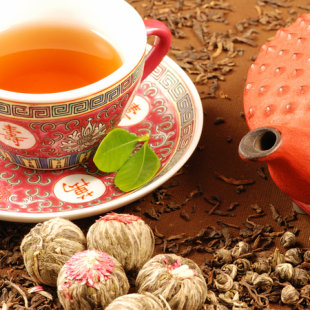
Ho Yan Hor Herbal tea is considered somewhat of a miracle worker in China, and is known for its ability to cure the common cold and sooth headaches. Made of a mix of 24 carefully selected Chinese herbs, this 65 year old recipe is perfect for a morning detox. It is packed full of antioxidants and has mild diuretic qualities that cleanse your digestive system of toxins and lead to glowing skin and a peak in energy levels. 

Oolong tea is said to increase fat burning ability by 10%, plus Green tea flushes out toxins and contains antioxidants called catechins that are known to increase liver function.

Chinese Super Foods 

Vermicelli noodles are made from the starch of the mung bean which are packed full of antioxidants. Add to any stir fry as a low calorie, gluten free alternative to heavier wheat based noodles. 

Leafy Pak Choi is also proven to aid digestion and contains a cocktail of vitamins A and C and powerful anti-oxidants.

Ginseng grows wild in north-eastern China and has been known aid the regulation of blood sugar levels. When brewed in tea it can act as a natural appetite suppressant. Ginseng has also been used as a natural alternative to Viagra. Ooohhh errrr. 

Sesame seeds, known to actually protect livers cells from the damaging effects of alcohol and other chemicals, sesame seeds are a fantastic choice for a body clean up. Tahini is a staple in Asian cooking, made from ground sesame seeds; a gem for everyday detoxing! 

Ginger is a powerful digestive aide and beyond settling tummy troubles, it is said to be a natural anti-inflammatory packed with antioxidants. Oh and don't forget garlic! It has been known to regulate blood sugar, aid the natural detoxification of nicotine and other toxins and can even help to reduce stress. Use freshly crushed garlic in all dishes and add to cooked dishes just before serving to preserve its anti-bacterial benefits. Just don't plan any romantic dates afterwards...

Balance your Yin and Yang 

Ancient Chinese dieticians categorised all foods as either yin or yang depending on whether they generate heating (yang foods) or cooling (yin foods) sensations in our bodies. These terms often have nothing to do with the food's taste, nor how it is cooked, but relate to deeper essences of the foods nature. 

Heating foods tend to be sweet, grow under the hot sun or contain lots of fats like apricots, grapefruits or walnuts. Cooling foods grow in little sunshine, are salty, lean, rich in potassium and have a soft and wet texture like corgettes, bananas, oysters, and seaweed. 

Get yourself back on track this January with a healthy balanced meal of three parts yang and two parts yin. 

Ref: http://sg.entertainment.yahoo.com/news/add-chinese-health-tricks-diet-flatter-stomach-123600978.html